Hazmat Compliance FAQ
Frequently Asked Questions
Learn more about hazmat compliance, SDS management, hazmat manifests, cargo tank records, and hazardous materials documentation requirements.
What is hazmat compliance software?
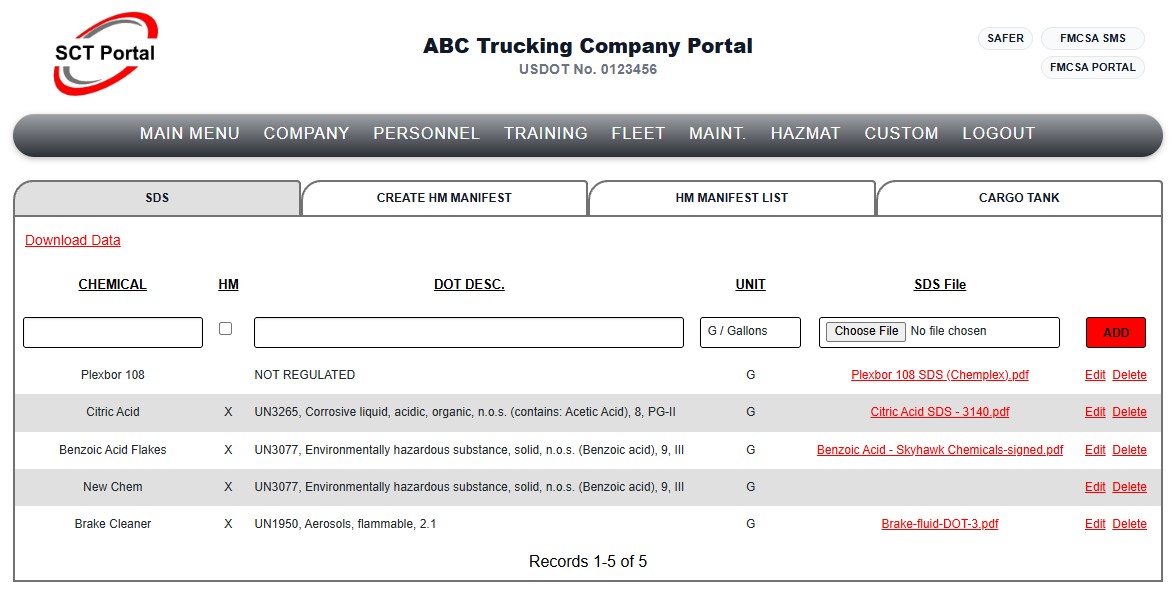
Hazmat compliance software helps companies manage SDS files, hazardous material records, shipping papers, manifests, cargo tank documentation, and DOT hazmat compliance requirements.
What are SDS files?
Safety Data Sheets (SDS) provide important information about hazardous chemicals, including handling procedures, storage requirements, emergency response instructions, and workplace safety precautions.
What information is required on hazmat shipping papers?
Hazmat shipping papers commonly include the proper shipping name, hazard class, UN/NA number, packing group, emergency response information, and hazardous material quantities.
Why are cargo tank records important?
Cargo tank records help companies document inspections, certifications, maintenance history, testing requirements, and hazardous materials transportation compliance.
Can hazmat compliance records be stored digitally?
Yes. Hazmat compliance software allows companies to securely store SDS files, manifests, shipping papers, permits, inspection records, and hazardous materials documentation digitally.
How does hazmat software help with DOT compliance?
Hazmat software helps companies organize hazardous materials records, maintain shipping documentation, track SDS files, and prepare for DOT inspections and hazmat compliance reviews.
Safety Compliance Tracker helps fleets and companies manage DOT compliance,
DQ files, fleet maintenance, online training, OSHA compliance,
and audit readiness from one centralized platform.